| # | Product | Rating | Price | |
|---|---|---|---|---|
| 1 | 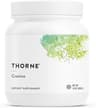 Thorne CreatineBest overall — NSF Certified for Sport micronized monohydrate | Check current price | Check price on Amazon | |
| 2 | 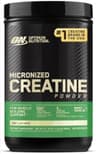 Optimum Nutrition Micronized CreatineBest value — trusted brand, micronized for easy mixing | Check current price | Check price on Amazon | |
| 3 | 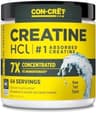 CON-CRET Creatine HClBest for sensitive stomachs — patented HCl formula | Check current price | Check price on Amazon | |
| 4 | 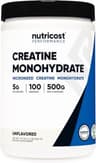 Nutricost Creatine MonohydrateBest budget — pure monohydrate, 120 servings | Check current price | Check price on Amazon | |
| 5 | 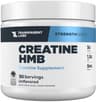 Transparent Labs Creatine HMBBest formula — creatine + HMB + vitamin D | Check current price | Check price on Amazon |
Prices shown are approximate and may vary at the retailer. Last verified July 8, 2026.
How we evaluate
We compared more than 20 creatine supplements using published lab data, third-party testing certificates, and manufacturer specifications, scoring every product against five weighted criteria:
Short version: Kre-Alkalyn is pH-buffered creatine sold on the promise that it survives your stomach better than monohydrate, so you can skip loading and take smaller doses without bloating. When researchers tested that promise head-to-head, buffered creatine was no better than plain monohydrate on muscle creatine, body composition, strength, or side effects — and it costs more. Monohydrate is cheaper, better studied, and still the form to buy.
If you want the fuller picture on every form, start with our creatine forms compared guide. This article zooms in on one matchup: Kre-Alkalyn (buffered creatine) vs creatine monohydrate.
What Is Kre-Alkalyn (Buffered Creatine)?
Kre-Alkalyn is a higher-pH form of creatine, patented by All American Pharmaceutical and licensed to a lot of supplement brands. "Buffered" just means an alkaline agent is added to raise the pH of the powder.
The marketing pitch rests on one central claim: that ordinary creatine monohydrate breaks down into creatinine (a useless byproduct) in the acidic environment of your stomach, so much of what you swallow is "wasted." Raise the pH, the argument goes, and the creatine survives intact. From that single premise, the rest of the sales copy follows:
- No loading phase needed
- Smaller daily doses (often 1.5g) do the same job
- No bloating or water retention
- Less creatine "lost" as creatinine
It's a tidy story. The problem is that the premise it's built on doesn't hold up.
What Is Creatine Monohydrate?
Creatine monohydrate is the gold standard — creatine bound to a water molecule, and by a wide margin the most studied sports supplement on the market. Hundreds of peer-reviewed trials, decades of use, and a deep safety record back it.
The protocol is boring on purpose: 5g daily, optionally with a 20g loading phase for the first 5–7 days to saturate your muscles faster. It ends up stored as phosphocreatine, ready to regenerate ATP during hard efforts.
Key brand examples: Thorne Creatine, Optimum Nutrition Micronized Creatine, Nutricost Creatine Monohydrate.
The Evidence That Settles It
Most "vs" articles wave at studies without naming them. Here's the one that matters.
In 2012, Jagim and colleagues ran a randomized trial published in the Journal of the International Society of Sports Nutrition: "A buffered form of creatine does not promote greater changes in muscle creatine content, body composition, or training adaptations than creatine monohydrate."
The design was built to test Kre-Alkalyn's exact claims. 36 resistance-trained participants trained for 28 days while taking one of three protocols:
- Creatine monohydrate: 20g/day loading for 7 days, then 5g/day
- Kre-Alkalyn at an equivalent loading dose
- Kre-Alkalyn at the low 1.5g/day the manufacturer recommends
All three groups gained muscle creatine, strength, and lean mass. The catch: there were no significant differences between them. Buffered creatine didn't build more muscle creatine, didn't improve body composition more, didn't boost strength or anaerobic power more, and didn't cause fewer side effects. The low-dose Kre-Alkalyn group performed like the others despite taking a fraction of the creatine.
The authors' conclusion is blunt: the findings "do not support claims that KA is a more efficacious form of creatine." It's a single study, and it was funded by a creatine monohydrate manufacturer (AlzChem, maker of Creapure) — a conflict that, if anything, cuts toward the result it reported. Even so, it's a well-designed randomized trial that tested the marketing head-on, and the marketing lost.
About That "Creatine Turns to Creatinine in Your Stomach" Claim
This is the load-bearing beam of the buffered-creatine pitch, so it's worth being clear: it doesn't hold up.
Creatine does slowly convert to creatinine in acidic solution over time — which is why you shouldn't premix a jug and leave it on the counter for days. But the transit through your stomach takes minutes to a couple of hours, not days. Across that short window, creatine monohydrate is largely stable. Reviews of creatine chemistry report that it is not meaningfully degraded during normal digestion — roughly 99% is either absorbed or excreted intact, leaving only a tiny fraction lost to creatinine.
In other words, the "wasted creatine" problem that buffering claims to solve is mostly not a real problem. If almost none of your monohydrate is lost to stomach acid, raising the pH to "protect" it has little left to do. That lines up neatly with why the Jagim trial found no performance edge.
Head-to-Head Comparison
Research Backing
| Form | Studies | Consensus |
|---|---|---|
| Monohydrate | 500+ peer-reviewed | Proven effective |
| Kre-Alkalyn (buffered) | A handful, some industry-funded | No advantage shown |
Monohydrate isn't just ahead here, it's in a different league. The direct head-to-head (Jagim 2012) shows parity at best for buffered creatine.
Dosing & Loading
Monohydrate works at 5g/day, with optional loading to saturate faster. Kre-Alkalyn is marketed at 1.5g/day with no loading. The trial tested exactly that low dose and it kept pace — but so did plain monohydrate at standard dosing, which costs less per gram. The "smaller dose" selling point only matters if the smaller dose is cheaper for the same result, and it usually isn't.
Verdict: Tie on outcome, monohydrate wins on cost per result.
Bloating & GI Comfort
Buffered creatine is sold as bloat-free. But the Jagim trial found no reduction in side effects versus monohydrate. If you're prone to GI upset, the better-evidenced fix is a micronized monohydrate, splitting your dose, or taking it with food. And if a sensitive stomach is your real concern, creatine HCl has more of a track record for that specific use than buffering does.
Verdict: No proven edge for buffered creatine.
Price Per Effective Dose
| Product | Form | Approx. cost per 5g effective dose |
|---|---|---|
| Nutricost Creatine Monohydrate | Monohydrate | ~$0.12 |
| Optimum Nutrition Micronized | Monohydrate | ~$0.27 |
| Typical Kre-Alkalyn product | Buffered | Often $0.40+ per equivalent dose |
Prices move constantly, so check the current price at the retailer before you buy — but the relative order is stable. Buffered creatine carries a premium for a benefit the research hasn't found.
Verdict: Monohydrate wins on value, decisively.
Third-Party Testing
- Thorne (monohydrate): NSF Certified for Sport.
- Optimum Nutrition (monohydrate): Informed Choice certified.
- Nutricost (monohydrate): Third-party tested, batch COAs available.
- Kre-Alkalyn products: Patented branded ingredient; independent certification varies a lot by the finished-product brand.
If you're a tested athlete, the best-certified options here are monohydrate products.
Verdict: Monohydrate brands lead on transparent testing.
Who Should Choose Each?
Choose Monohydrate if:
- You want the most research-backed, best-value creatine (almost everyone)
- You're a tested athlete who needs strong certifications
- You'd rather not pay a premium for an unproven tweak
Top pick: Thorne Creatine (NSF Certified for Sport)
Consider Kre-Alkalyn only if:
- You specifically prefer its capsule convenience and don't mind paying more
- You've genuinely tried monohydrate and want to experiment (with clear eyes about the evidence)
Even then, if your issue is stomach comfort, creatine HCl is the better-targeted alternative.
The Bottom Line
Buffered creatine isn't worth the premium for almost anyone. Its core claim — that stomach acid wastes your monohydrate — is largely a non-problem, and the one trial built to test its performance claims found no advantage over plain monohydrate on muscle creatine, body composition, strength, or side effects.
Monohydrate is cheaper, backed by 500+ studies, and equally effective. That's the whole case.
New to creatine? Read our complete beginner's guide, or see how every form stacks up in creatine forms compared. Ready to buy? Here's our best creatine picks.
Frequently Asked Questions
Is Kre-Alkalyn better than creatine monohydrate? No. The one randomized head-to-head trial (Jagim 2012, JISSN) found buffered creatine was no better than monohydrate on muscle creatine, body composition, strength, or side effects.
Does creatine monohydrate really get destroyed by stomach acid? Barely. Creatine converts to creatinine slowly in acidic solution over days, but stomach transit takes minutes. Estimates put the loss during normal digestion at under about 1%, so the "wasted creatine" premise behind buffering doesn't hold up.
Do I need to load Kre-Alkalyn? Its makers say no. But you don't strictly need to load monohydrate either — 5g/day saturates your muscles in a few weeks. Loading just gets you there faster.
Is buffered creatine easier on the stomach? The evidence doesn't show it. If GI comfort is your goal, try micronized monohydrate, dose with food, or look at creatine HCl.